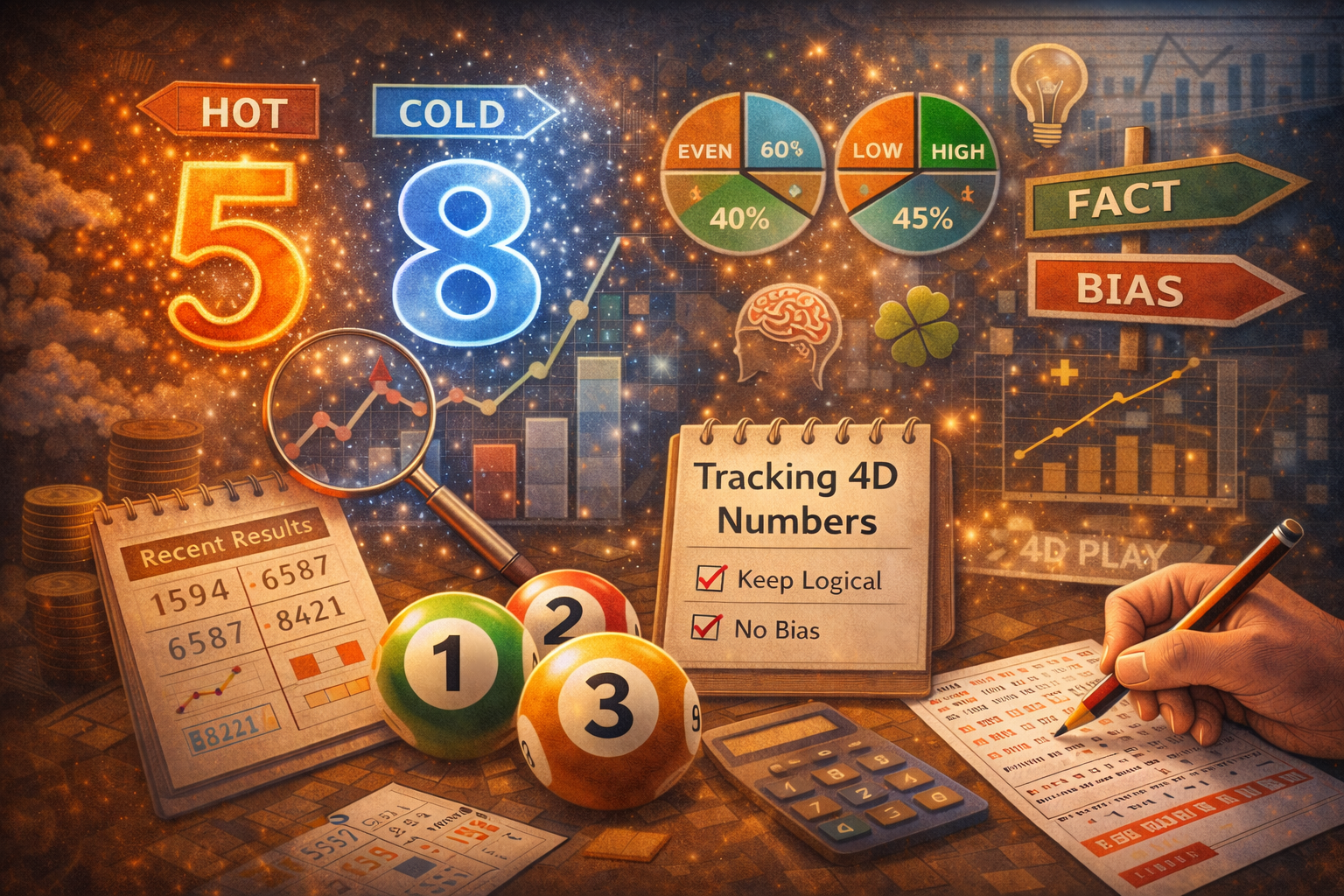
Tracking number patterns is a common practice among 4D gaming players. Many believe that reviewing past results can provide insights or help guide future selections. While this process can make gameplay more engaging, it is important to approach it with clarity and avoid common biases.
This guide explains how to track number patterns in a structured way while maintaining a logical and responsible mindset.
Why Players Track Number Patterns
Pattern tracking often gives players a sense of structure. Instead of choosing numbers randomly, they feel more involved in the process by analyzing previous results.
Creating a Sense of Control
When players track numbers, they may feel they are making informed decisions. This sense of control can enhance the overall experience, even though the outcome remains random.
Staying Engaged
Reviewing past results keeps players engaged with the game. It adds an analytical element that goes beyond simple number selection.
Understanding the Limits of Patterns
Before diving into tracking methods, it is essential to understand that 4D gaming outcomes are random. Patterns observed in past results do not influence future draws.
Independent Events
Each draw is independent, meaning previous results have no effect on upcoming outcomes. Recognizing this helps prevent unrealistic expectations.
Short-Term vs. Long-Term Trends
Short-term trends can appear meaningful but are often coincidental. Over a longer period, results tend to distribute more evenly.
Simple Methods to Track Numbers
Tracking does not need to be complicated. Simple and consistent methods are often the most effective.
Recording Past Results
Start by keeping a record of recent results. This can be done using a notebook, spreadsheet, or digital tool. Focus on maintaining accuracy and consistency.
Grouping Numbers
Some players group numbers based on categories such as odd and even digits, high and low ranges, or repeated digits. This helps organize data in a clear way.
Frequency Tracking
Counting how often certain digits appear can provide insight into distribution. However, it is important to remember that frequency does not predict future outcomes.
Common Biases to Avoid
Bias can influence how players interpret patterns. Being aware of these tendencies is key to maintaining objectivity.
Confirmation Bias
This occurs when players focus only on patterns that support their beliefs while ignoring conflicting information. Staying open-minded helps reduce this bias.
The “Hot and Cold” Fallacy
Some players believe that frequently appearing numbers will continue to appear, or that rarely seen numbers are “due.” Both assumptions are incorrect in random systems.
Overinterpretation
Finding meaning in small sample sizes can lead to incorrect conclusions. It is important to avoid reading too much into limited data.
Combining Tracking with Practical Thinking
Tracking can be useful when combined with a balanced perspective.
Use Tracking as a Reference
Instead of relying on patterns as predictions, treat them as background information. This helps maintain realistic expectations.
Keep Your Approach Flexible
Avoid becoming too attached to a specific pattern or method. Flexibility allows you to adapt and explore different approaches.
Maintaining Responsible Play
Tracking should enhance your experience, not create pressure or unrealistic expectations.
Set Clear Limits
Establish boundaries for time and spending. This ensures that tracking remains a supportive tool rather than a source of stress.
Focus on Enjoyment
Remember that 4D gaming is a form of entertainment. Keeping the experience enjoyable should always be the priority.
A Balanced Approach to Pattern Tracking
Tracking number patterns can add depth and engagement to 4D gaming. However, understanding its limitations is essential for maintaining a healthy perspective.
By combining simple tracking methods with logical thinking and responsible habits, players can enjoy the analytical side of the game without falling into common traps. The key is to stay informed, remain objective, and appreciate the experience for what it is—an unpredictable and engaging form of entertainment.